|
A biography by Rusty
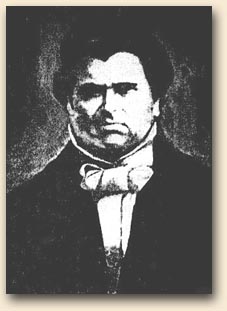
Lang, used with permission. David Folsom was one of the early leaders of the Choctaw tribes and was instrumental in negotiating the treaty that gave them a new homeland in Oklahoma. He was born Jan. 25, 1791 in Bok Tuklo, Miss. ,a son of Nathaniel Folsom, a white trader who had pioneered to the West from Rowan County, N.C., by way of Georgia. Nathaniel, probably a descendant of the pre-revolutionary Folsom family who emigrated to Massachusetts from England, married two Choctaw Indian sisters. The sisters, I-Ah-Ne-Cha and Ai-Ne-Chi-Hoyo, descended from a long line of chiefs. Nathaniel was highly regarded among the people who adopted him and his family multiplied, with him siring 24 descendants. The Choctaws labeled him "Father of all Folsoms." When David was about 7, he lived with his sister Molly and her husband Samuel Mitchelll, a U.S. Indian agent. He stayed three years, learned to speak very good English and showed remarkable musical talent. After returning home, he worked on his father’s homestead at Pigeon Roost, making his own money raising crops. Nathaniel home-schooled David and hired a tutor to help him.
David left at 16 to go to school in Tennessee, but only stayed six months then returned to help Nathaniel at his tavern and trading post. David, himself a half-blood, married Rhoda Nail, daughter of Henry Nail, a Revolutionary War standout, and his Choctaw wife. David was the first Indian married under the white man’s, not tribal law. At the same time, John Pitchlynn married Rhoda, daughter of Ebenezer Folsom, who died; he then married Sophia, who bore Peter. Peter P. Pitchlynn, whose Indian named translates to "Snapping Turtle," later went on to become an important Choctaw leader. David served three years in the Indian Wars, commissioned by General Andrew Jackson and fighting with him and the great Choctaw chief, Pushmataha in the Pensacola Battle. He left with the rank of colonel, a title that honored him the rest of his life. A great advocate of education, David induced Presbyterian missionaries to settle in the area and build several Christian schools, one of them near David Folsom's home, where a community of about 100 Choctaws had settled.(CMM) As with other members of the Folsom and other early white settlers such as Louis LeFlore, John Turnbull and John Pitchlynn, he was greatly influenced by protestant missionaries, such as Cyrus Kingsbury, who moved into the area. They inter-married and were converted to their Christian religion while maintaining the better qualities of Indian life; their honesty, independence and tribal ways. The missionary school
boys learned to read and write, and heard bible lessons, while going
into the woods with axes to clear and David housed some missionaries at his home and taught them the Choctaw language. David’s children, Salina, Peter, Loring and George, no doubt benefited from their educated guests. White pioneers, however, were lobbying Washington, D.C., and President Andrew Jackson, to move the Choctaws out of Mississippi westward. Similar removals were being sought for other tribes including the Creeks of Alabama, Cherokees of Tennessee and Kentucky, and Seminoles of Florida. The Doaks Treaty of 1825 partially settled the unrest by giving away some of the tribe’s Arkansas land. Forces were reporting to Washington the failure of the education and religious efforts of the missionaries. David Folsom served as an intermediary between the two factions, while remaining opposed to removal. He visited the mission schools to check on their progress, along with chiefs Puckshanubee and Mushulatubbee, and then reported to Washington. The issue of slavery also split the tribe further -- well-off "aristocratic" landowners such as John Pitchlynn, who owned 200 acres and 50 slaves, were swayed by desire to keep their plantations. David owned 10 slaves himself. And chief Mushulatubee owned 10 slaves for his 30 acres. Most of the members of the nation, however, owned no land and lived off the land communally. Meanwhile, personal debts prompted chiefs Pushmataha and Mushulatubee to favor selling their lands to the U.S. in order to pay off their debts to traders. A delegation, including the chiefs and David Folsom journeyed to Washington, where Puckshanubbee stepped off a cliff and died. History differs on whether or not it was an accident, because it brought a new leader, Robert Cole, who was a critic of the missionary schools. On the same trip, laden with fine food and many rounds of whiskey, chief Pushmataha died of what was probably pneumonia. Said David Folsom, "God has seen fit to take those men away so that better men may be raised up in their places." Folsom became a very powerful person, and was respected as a Christian man and an eloquent, passionate speaker for his causes. In 1826 David Folsom was elected chief of the northern district, one of three in the Choctaw Nation, as tribe members began to trust him more than the despotic Mushulatubbee. It marked the beginning of leadership of the older generation being replaced by mixed-blood Indians. Students at the Mayhew mission wrote to Folsom after a visit: "We rejoice to think that we have a chief who is a friend to his people, and wishes their good, and favors the schools in the nation. Had it not been for you and the friends of the mission, we think we should have been wandering about in the wilderness." Indians were beginning to show their new civilized ways. At Folsom’s new home near Yoknokchaya on Robinson Road, tribe members were raising cotton, making cloth and operating blacksmith shops. They were more temperate in their drinking, but still enjoyed their visiting, feasting and stickball games. Meanwhile Folsom was
beginning to see the ultimate reality of the cessation of the
Mississippi homeland and tempered his position in
David had charge of the first of the groups moving to Oklahoma. In the fall of 1832, the group suffered disease, hunger, rains and floods before arriving in Little River in Eastern Oklahoma. Nathaniel and his son McKee settled at Mountain Fork, later called Eagle town, Red River County. Nathaniel died there Oct. 19, 1833, after they settled in Choctaw Nation, Indian Territory, which was to become Oklahoma. Rhoda Folsom died in 1837. David then married Jane (Jincy) Ball in 1841. David had a large influential family in religion and tribal politics. His daughter Susan was the wife of the Governor of the Chickasaw tribe. David’s son, Loring S.W. Folsom, married Melvina Pitchlynn about 1842 in Colgate Co., I.T. His son, Col. Sampson N. Folsom, was an officer in the Choctaw Regiment in the Confederate Army. Many Folsom descendants went on to achieve prominence from public service in the tribe, in law and the ministry. ((COO). None of these were more beloved or accomplished, however, than David, who died at the age of 56. He was buried at Fort Towson cemetery. His tomb inscription reads, in part: "He being dead yet speaketh." [Ed. note: the full inscription reads...The inscription on his headstone in the old Fort Towson Cemetery reads: "To the memory of Colonel David Folsom, the first Republican Chief of the Choctaw Nation. The promoter of industry, education, religion and morality, was born January 25, 1791, and departed this life September 24, 1847. Aged 56 years and 8 months. ‘He being dead yet speaketh.’"]
Sources:
Back to Folsom History Or, Back to LIST
Copyright
2002, all rights reserved Page design: Some
graphics by:
|
 cultivate the land; the manual
labor causing some consternation to older Indians, who were accustomed
to children enjoying a carefree life. Strife had begun within the tribe
among the full bloods, who wished to retain their native ways; hunting,
game-playing and their pagan religions -- and the mixed-blood leaders
such as Folsom and Pitchlynn, who favored a more educated and civilized
life for the tribe, while retaining their beloved homeland in
Mississippi.
cultivate the land; the manual
labor causing some consternation to older Indians, who were accustomed
to children enjoying a carefree life. Strife had begun within the tribe
among the full bloods, who wished to retain their native ways; hunting,
game-playing and their pagan religions -- and the mixed-blood leaders
such as Folsom and Pitchlynn, who favored a more educated and civilized
life for the tribe, while retaining their beloved homeland in
Mississippi. 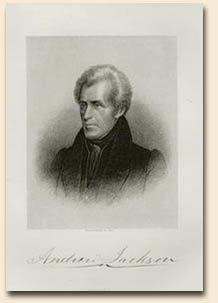 order to gain
favorable terms in the inevitable treaty . He sought for rights of the
poor, as well as the rich. The nation was approaching a state of civil
war with removal, slavery, education splintering the tribe. At the same
time the state of Mississippi sought to impose its own law on tribe
members. Again Folsom stepped up and showed his leadership in a
show-down between the factions, when hundreds of warriors mounted with
guns, bows and arrows faced off. However, Folsom proffered his hand to
his opponent, Nitakechi, who accepted it. The two opposing sides built a
fire and held council and a civil war was averted.
order to gain
favorable terms in the inevitable treaty . He sought for rights of the
poor, as well as the rich. The nation was approaching a state of civil
war with removal, slavery, education splintering the tribe. At the same
time the state of Mississippi sought to impose its own law on tribe
members. Again Folsom stepped up and showed his leadership in a
show-down between the factions, when hundreds of warriors mounted with
guns, bows and arrows faced off. However, Folsom proffered his hand to
his opponent, Nitakechi, who accepted it. The two opposing sides built a
fire and held council and a civil war was averted.  Negotiations
led in part by Folsom for the Indians, and President Andrew Jackson,
finally settled the issue of ceding land in Mississippi and removal of
the tribe to Oklahoma. On Sept. 27, 1925 , David was among the Choctaw
chiefs and delegates who signed the
Negotiations
led in part by Folsom for the Indians, and President Andrew Jackson,
finally settled the issue of ceding land in Mississippi and removal of
the tribe to Oklahoma. On Sept. 27, 1925 , David was among the Choctaw
chiefs and delegates who signed the 


