|
As you can see from the image above, the men in the Gordon family were fishermen. And, as the name implies, they were fishermen who came from Ireland. In the northern part of the state of Michigan, in Charlevois
County, are a series of islands about 37 miles out into Lake
Michigan. The largest of these is called Beaver Island. It is
a beautiful place, and if you'd like to see some
gorgeous photos, all you need to do is to We also owe many thanks to a local Beaver Island genealogist, Jim Sunkes, who was instrumental in locating the Gordon family for us. At this page you can learn more about him and his work: http://www.beaverisland.net/History/Genealogy/index.htm and perhaps you will send thanks to Jim Sunkes yourself. He sounds like a great guy! White traders and trappers began to appear on Beaver island and other islands in the area in the early 1800s. Trapping, fishing, and cutting wood for the passing steamers allowed men to earn a living at this frontier. By the 1840s, two trading posts were flourishing. Economic power shifted to Beaver Island from Mackinac Island because of Beaver's good fishing, ample forests, and vastly superior harbor. In 1850, 100 people lived in a growing community at Whiskey Point, unaware that the few Mormons already present would soon overwhelm them and force them to leave.
Over the following three decades, the population grew in surges, taking on a decidedly Irish flavor. Ordinary conversations, as well as services in the Catholic Church, were conducted in Gaelic. Of the 881 residents in 1880, there were 141 Gallaghers, 123 Boyles, and 90 O'Donnells recorded in the census. Closely knit, isolated from the rest of the world during the winter, this community developed a unique identity. Because they controlled the nearby fishing grounds, the economy thrived. By the mid 1880s Beaver Island had become the largest supplier of fresh-water fish in the country. But the invention (1872) and proliferation of the steam tug posed a severe threat. Suddenly fishermen from mainland ports could cross to the grounds, lay five miles of nets, and cross back before dark. No sooner had the Island fishermen adjusted to the loss of their monopoly than a second blow befell them: a sudden drastic reduction in the supply of fish, starting in 1886. Due to over-fishing, the harvest declined to half its previous rate by 1893. At some point the Gordon family joined the growing population of Irish fishermen on Beaver Island and neighboring islands. And it appears as if some of them, at least, may have come through Canada before coming to this country. At least a great many of the Irish fishermen in this area came that way. It appears that the Gordon family may have arrived in the Beaver Island area in about the 1850s. And what a beautiful place to live! There are
beautiful forests, magnificent views of the skies and the sea. And,
there was privacy, since Eventually fishing in the area became so popular it was eventually fished out, and the Irish fishermen and their families began moving on to other areas in the early 1900s. Family history has always said that Rose Gordon and a "bunch" of her brothers and sisters came to Gloucester, Massachusetts together, after hearing stories about the fishing there. It appears that in this case, family history is probably right. Rose Gordon was Jim and Don's father's mother (their grandmother). Jim spent many memorable times with his "Nan," Rose Gordon Foley, in Gloucester. He felt at home at her home, and had a great time with her. When he was small she had a big old Victrola in her bedroom and to play it he had to climb upon the bed to be able to open it, put the record on, and listen, and she allowed him to.. She would come and pick him up, and after they got back to her house they would walk downtown... to one of the old diners that looked like a bus and get him a clam plate (he hasn't changed much, has he?) or she would take him to the movies... he remembers her taking him to see "The Thing." It is the first movie he remembers seeing. She took him to church with her every Sunday at the "Lady of Good Voyage" Catholic Church... he says she wore his knees out. When he was a bit older, after his parents divorced (he was about ten), he would spend summers with her. She bought him his first bicycle! He was 12 years old and it was a 26" Raleigh bike with skinny tires, used! Later she ran a bed & breakfast- type home and he would help her make up the rooms. He loved sending all the dirty linens down the laundry chute. Out in back of the house was a big salt marsh, and he would spend hours out there at low tide, having fun on all that smelly, slippery goo looking for shells and whatever he could find. On one side of the yard was a seawall, since the river flowed right next to the house. It was just absolutely ideal for him. What young boy would not want to have a river flowing right next door, the ocean and beaches at the front door, and a salt marsh at the back door. Boy, talk about heaven. He could sit right there on the wall fishing, trying to catch crabs, etc., and as soon as he felt the first twinge he was very close so he could run in and beg Nan for something to eat. Across the street and in front of the house you looked to the east, and out at the harbor, just beyond the seawall on the far side of the street in front of the house. At low tide there was a beach there that he loved to explore; it was just full of tidal pools and all sorts of interesting things. He could also walk to Stage Fort Park often to play; there he could climb all over the old fort playing pirates, climb around on the rocks, and play on the beach. A woman who came to visit Gloucester would stay with his grandmother, and he took her to see all the sites. Soon he was taking others to see the town, and sometimes they'd want him to he would take them on sightseeing boats, etc. They tipped him for that. Imagine that! In the evenings they would sit quietly on the porch watching the sea, or perhaps go inside to listen to a bit of the radio before bedtime. Mostly, however, the grandmother and the adventurer were pretty much ready for bed by the time they could get there from their busy, busy days. She traveled quite a bit to see her scattered family members, some still back in Michigan, and others in Ohio and Missouri; and as she got older, she traveled more; and Jim was not nearby often either. He was moving around with one parent or another, so they saw little of one another after that. After she became frail she went to live with her son George, and she lived to be 97 years old! He also was fascinated by his grandfather, Wallace Lenox Foley (Rose's husband). He was a police officer, and used to take Jim places sitting upon his shoulders so "Jimmie" could see everything very well. He thought his grandfather was a giant of a man! He died when Jim was just four years old, so he was not around long. The town of Gloucester is one of the oldest in this country, having been settled in 1623, and boasts of being the country's oldest port, with the area settled before 1643. Steeped in the history of the formation of our heritage, our country, and the struggles it went through, Gloucester has also always been a main fishing port, and this demanding industry, with the loss of life that comes from such perilous work has also created its own history. Perhaps one of the best of the New England towns, there are many homes that have been kept in good condition, and many others that have been restored, and a visit there can easily take you back in time a few centuries. To Jim, and his brother Don, just three years younger, it was an adventurous place. Not many many people lived there when they were small, and there were more woods, forests, streams, lakes, rivers, and other places where they could practice their woodland skills, and have a great time, than they would ever be able to get bored with. Both boys where avid outdoor nuts, and unless they were keeping an eye on smaller children, they were off on an adventure of some kind. I am amazed that they actually survived some of them!
Okay! On to the Gordon Family lineage?
Copyright (c) 2002, all rights reserved.
|
|
Please let us know of any omissions or corrections by contacting: Jim and Marcie's AlaskaWeb. |



 check out
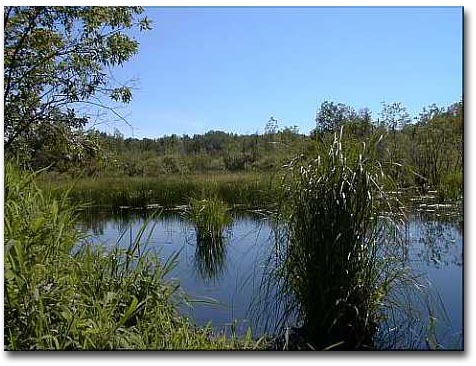 Beaver Island was blessed to be near some of the best fishing
grounds in the world. The Mormons had excluded the gentiles from
partaking in this bounty, but once the Mormons were gone, Irish fishermen
began to appear. They came from Gull Island, Mackinac Island, various port
cities on the mainland, and County Donegal in Ireland. Once they settled
in, they wrote to their families and friends about "America's Emerald
Isle."
Beaver Island was blessed to be near some of the best fishing
grounds in the world. The Mormons had excluded the gentiles from
partaking in this bounty, but once the Mormons were gone, Irish fishermen
began to appear. They came from Gull Island, Mackinac Island, various port
cities on the mainland, and County Donegal in Ireland. Once they settled
in, they wrote to their families and friends about "America's Emerald
Isle."  the Island is 37 miles from shore. Many of
these people had come right from Ireland, and did not speak English at
all. Here, they were with many of their fellow countrymen, which
made it seem even more like home. It was probably somewhat like a
"mini" Ireland while they were all living there, with great
fishing, snug log cabins to keep out the winter storms, and many of them
came in family groups that grew quite large in the years they they lived
there. And when they left there, they were to leave mostly
together, also.
the Island is 37 miles from shore. Many of
these people had come right from Ireland, and did not speak English at
all. Here, they were with many of their fellow countrymen, which
made it seem even more like home. It was probably somewhat like a
"mini" Ireland while they were all living there, with great
fishing, snug log cabins to keep out the winter storms, and many of them
came in family groups that grew quite large in the years they they lived
there. And when they left there, they were to leave mostly
together, also.