
|
There's Gold in those
Tailings The dog was stretched out under the back of the truck. I was feeling
light headed as I glanced over his way, tongue hanging out, barely
moving. I felt sorry for him with his heavy fur coat on while I was in
my t-shirt and still boiling. It was 92 degrees in interior Alaska. Most
people would laugh if I told them the temperatures had gotten this hot
in the Land of the Midnight Sun. I had actually seen it hotter when I
was a boy on my father's mining claims in the Circle goldfields. I've
had people from Arizona, Nevada, Arkansas, tell me it seemed hotter in
Alaska on hot days than in their neck of the woods. Though the humidity is practically zero here, the heat is very dry
and the sun is scientifically closer in the summer than other parts of
the world. Fortunately I had a large insulated cooler of ice water in
the truck but I lacked shade and enough common sense to find any. I looked out over the tailings, imagining this was some sort of
desert and in essence it was on this day. Fortunately I knew that not
far away the permafrost bluffs were melting and clear, cold streams
could be found to roll around in for both the dog and me. I had shoveled in the last bucket load of dirt and loaded it into the
truck. The dog slowly made his way to the tail gate where I hoisted him
into the back, nearly burning my arms and hands on his dark fur. At home in the cool back yard, I rigged up the garden hose a set up a
panning area and proceeded on panning old tailings from a bygone
operation. For the next week, mostly in afternoons and evenings I
averaged about an ounce of gold per 5 gallon bucket. One might gasp at this quantity in such a small amount of dirt, but
its amazing how many spots like this can be found out there. I imagine
they are even down in places like Arizona, or maybe California. I had a
friend go through old dry wash tailings while on vacation one winter in
Arizona and recovered a couple ounces with a metal detector in one small
area, including a 7 pennyweight nugget. Sometimes these areas come by luck, but not always. They also come by
observation and research. In this particular hot spot, I had known about
an old mining operation that had used a poor recovery system that pretty
much sent about half the gold out the other end of the box into
tailings.I had a hunch that if I could find where the old timers had set up
this device I might have a chance at some fair amounts of gold. My hunch
was right, and it proved to be a good spot, one I would continue to go
back to whenever I could get to the area. Its sort of like a lost gold
mine; In this world there's only a couple of us, not including the dog,
that know about this place and we'll probably take this secret to our
graves. I know of more tailings up near Nome and Alaska's Seward Peninsula
where a prospector found a 3 ounce nugget with quartz in it in the
tailings. Upon further observation he found a number of other nuggets. There are a number of nice things about living in Alaska and looking
for gold. The first one is you can get lost anytime you want here, and
not allow anyone to find you if you wish. The second is the winters are
long enough it gives one time enough to research out old records and
documents in the libraries, and spend time talking with a few of the old
cronies from the past, listening for tips and secrets. The third one is
the long summer days in the north. So long that they play baseball games
all night. My grandpa used to work in his garden so long he'd be out
singing and pulling weeds at three in the morning and my father would
have to tell him what time it was and he was keeping everyone awake. In research while looking for good, potential tailing spots, look for
areas that were once hydraulicked. Though this method moved a lot of
dirt, it also had a poor gold recovery rate and anytime the opportunity
arises to get into some good hydraulicked areas, jump on it. The
odds are good something will be found. I have gone through old tailings
from hydraulicked areas in the Brooks Range, Alaska's northern most
mountain range and have had considerable luck in finding gold here. Dredges tailings are another big one. Though gold can be more
elusive at time, the big Yuba-type dredges let most of the big ones go.
I have heard more dredge tailing nugget stories than any other. The
classic is the visitor from Florida wandering around old dredge tailings
near Fairbanks and finds a 7 ounce nugget lying on top of the tailings
in plain sight. It had probably been there for 60 years, or had been
walked on a few times. I might have walked on it a few times too, who
knows. Never mind that dredge tailings have larger rocks Finding out where the large dredges quit working is another good clue for successful sniping in tailings. Some of the reasons dredges stopped working on creeks varied from, lack of gold to not enough room to move around. When an area like this occurs where the dredge had worked it's way up a gulch and had to turn around, they sometimes left behind and exposed prime pay layers and good tailings to examine. I first detected for nuggets with the Garrett Deepseeker
in the late 70s. My first target was in tailings near Fairbanks and I
found a quarter ounce nugget. I learned a lot from going through those
tailings. I learned there was a lot of old iron, and that I had to
search a lot, but the bigger nuggets were my reward. Tailings from drift mining are a great place to check. In the summer of 1997, a 54 ounce nugget was found in old hand mined tailings that dated back to 1910. I had metal detected in these tailings about 10 years before and found a quarter ounce nugget and a few small ones. Two prospectors in interior Alaska found 52 ounces in nuggets and fine gold in old sunken tailings which had sunk into the tundra and melted permafrost. They started panning and the colors were good. They setup a pump in a nearby pond and started sluicing. Low and behold in a week they had 52 ounces of gold for their hunches. Look for exposed pay-streaks where bedrock might
have been worked and tailings might have been moved around on bedrock,
or where portions of pay were piled up and forgotten. Such was the case
in the summer of 1997 when I was sluicing north of Fairbanks. I was on
an ancient creek worked around 1900, but recently
worked by a modern day operation. With permission from the While looking for old tailings stacked out along the creek, a lot of times those tailings are stacked on top of the original paystreak. Always check under old tailings if you suspect there might be gold from original pay layer. If you don't this will haunt you until you do. You'll spend the winter thinking about it. If you're truly seeking gold, but you don't commit yourself to the search, the odds are against any success. Sure there's the thing about luck but it takes a little hard work and commitment. Why do some coin and relic hunters find more than others, because of commitment. Of course it helps to search in an area where lots of activity created the relics and coins. But its no different in looking for gold. Obviously there's a tad more gold in Alaska than New York, not counting $20 gold pieces. And there are more Revolutionary War artifacts in New York than Alaska. Picking a spot out to prospect is the key to success. That's the first commitment. Then finding out a little of the gold history is the other. Distinguishing methods used and looking for little hints of oversight, recklessness where someone might have not thoroughly cleaned up, or used bad methods, can be your gain. I have had several instances where I had poor recoveries in my mining setups. I have allowed more gold to pass out the end of sluices and others have gone behind me and reaped the rewards. You win some you lose some, so the saying goes. God allows it to rain on the good and bad. My grandpa used to work old tailings at a place called Olnes, Alaska. It was drift mined back around 1908. Some of the shafts went as deep as 200 feet to bedrock. Grandpa made friends with some of the old timers like himself and he'd work the tailings from the drift mines with a rocker box. He took out two ounces one day by this method. On the beaches of Nome in 1899, prospector William Fee recovered 129 ounces in one day with a rocker box. It was the largest recovery of beach gold ever recorded in a day of mining with a rocker box. A dragline operator in the Circle goldfields had such lousy recoveries in the 1950s that miners were able to come in and get more gold from his tailings than the original paystreak. There are all kinds of stories like this. Throughout the north lie miles and miles of old tailings with gold still in them, waiting for the observant eye to catch a glimmer of gold missed and left behind for others to glean. The dog lie snoozing under the back of the truck. I didn't feel sorry for him today as I dug more old tailings and loaded them into buckets. I wasn't gulping ice water down today either. The dogs fur wasn't hot when I helped him jump into the back of the truck on this day. It was raining.
|
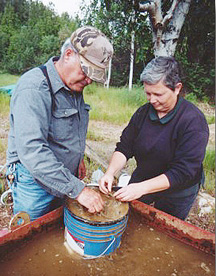
 mining
operator, I was allowed to snipe some bedrock and old tailings from a
bench above the old creek channel.
mining
operator, I was allowed to snipe some bedrock and old tailings from a
bench above the old creek channel.