
|
A
Paystreak in Slate I stared out across the Yukon River. I estimated the river at this
point to be a mile wide, maybe less. An occasional log floated by in the
tan colored river. The rubber rafts sat high and dry along the Yukon
River. During the past three days the river had gone down about ten feet
from where we had originally landed. Pay Streak Paul, Food Bar Phil, Bannock Bill and myself had smiles on
our faces when we left Coal Creek. We had found enough gold to make our
month long trip from Dawson City, Yukon Territory, a worthwhile float,
300 miles down the Yukon. Along the way we fished, explored ghost towns, and prospected for
gold. Now, 55 miles from our final destination of Circle City, a gold
rush town on the edge of the Yukon flats, our last grand adventure was
nearing its end. Somehow this last stop had been the best if not the
richest. We first pulled into Slavin's Road house, an old stern wheeler
stopover where the old boats took on firewood to fuel the steam boilers
in the old days. The road house was built of sturdy, squared off logs,
tightly fitted. Inside of the two-story structure, the ceiling was low
and the interior rustic. A front window looked out over the Yukon and at
an old meat cache on poles about ten feet off the ground. We had noticed
a weathered bear head on the front of the road house, secured on a large
spike. The skull still had some weathered fur, teeth and a dried out
hard, black nose. It looked like it was growling, the teeth were
gritted, probably in its last breathe even unto death. Never the less it
created an eerie atmosphere. We would be on the lookout for bears in the
area, that's for sure, and the skull was a reminder of its ancestors
still out there in the woods possibly marauding still. A road extended from the Yukon, four miles up nearby Coal Creek to a
mining operation with large mining equipment. Once the scene of a large
gold dredge operation, Coal Creek had been one of many creeks mined and
prospected during the gold rush era from 1899 to the present. A mining
camp located about 6 miles up the creek once boasted a post office which
was discontinued in 1945. Coal Creek had a seasonal population of 25 to
35 miners during summer and fall operations. The diggings were rich
enough to bring a dredge into and gold was scattered all through the
bedrock. From the road on the Yukon, barges brought supplies to waiting
trucks, and goods and equipment were hauled up to the mine. We hauled
our own gear up to the abandoned early part of the Century Road House.
We would spend a blessed three days under a real roof instead of tents
where we'd spent the last month. Tent life for a month gets old real
fast. Now, three days later, we had dragged the rubber rafts to the
receding Yukon River and shoved off into the current. The river was
about 2-3 miles wide here. I looked back at the mud bank where the road
cut into it below Slavin's. I could see the second story window where we
had spent hours in late evening and the wee hours of the morning playing
crazy eights. After a marathon card session on our first night there, I
woke up after a brief four hour snooze, and anxious for some action, I
slipped out of the road house with my gold pan and tools. I had heard of rumors about Coal Creek and they were rich rumors!
Before the float down from Dawson, I had done some research on the area
and knew what kind of mining area I was getting into. The day was clear and warm, but the mosquitoes were fierce! The creek
also served as a good watering hole for fresh drinking water. That's
what I was doing when I saw the first piece of gold When working bedrock like this, my rule of thumb is to fill the pan
completely then pan it. A full pan each time helps me gauge how much
gold per pan I'm producing. My first pan had finger sized slate bedrock
pieces with some clay attached and small rocks and sand. After stirring
up the pan, kneading the clay and rocks like dough, and rinsing off
bigger rocks and throwing them off to the side, I began the panning
process. The first pan revealed about $25 in gold. Success! The next pan ran
about the same but included a thick, flat, small nugget weighing about a
half pennyweight. In order to help keep the bugs away I had to smoke my pipe and apply
more repellent. I heard some old timers say they used to smoke pipes to
keep bears away! I thought about that and remembered the grizzly bear
skull hanging above the doorway back at Slavin's. I looked around
nervously, then thinking about how far in the middle of nowhere I was. I
kept a twelve gauge shotgun nearby just in case. I debated as to whether I should tell the other boys about this spot
or keep it all for myself. I Within an hour we were all digging out bedrock, smoking pipes,
rubbing bug dope on, and getting gold. Bannock Bill found the largest
nugget in the next day and had accumulated quite a nice bottle of gold.
In one crevice I found about $30 in gold in about a half hours time. After the first night, we sat at the old wooden table on the second
floor of the road house staring at each others gold, comparing nuggets
and flakes. Pay Streak Paul had somehow gotten a lot less than everyone
else and suggested we all put the gold in one pot and divide equally. We
would have pulled pistols on Pay Streak Paul if we would have had them
for making such a statement. It was every man for himself as far as
Bannock Bill and I were concerned. You can't expect to sleep life away
while others get the gold, then expect us to share with each other.
"They only do that in communist countries," Bill and I
commented. We beat Pay Streak real bad at cards that night and he got the
message. Of course we all laughed about it. You had to laugh to keep
your sanity after spending a month sleeping on the ground, fighting
bugs, rarely bathing, and now we only had a couple days of food left. I
was down to my last two packs of Top Ramen soup and had a package of
Kool Aid left. The next day we worked intently on recovering more gold. When most of
the good bedrock had been worked on the right limit of the creek, we
began working the left side. The second day results were better than the
first day, but the nuggets were small, but who cared. It was the
most we'd seen in awhile and we were happy. It wasn't the bugs that eventually drove us out, but hunger. With
supplies dwindled to a bare minimum, we figured we could leave it all
behind. The last golden day we got less gold. We weren't sure it was from
fatigue or starvation, but the pay definitely dwindled. The farther up
the creek we went the less pay we got. The bedrock was cleaned up well
at Coal Creek. I thought back on those last three days, daydreaming, staring back
upstream from where we'd just floated from. The hissing from the river
silt glided under the raft bottom. Suddenly Bannock Bill yelled;
"Sweepers! Logs! Paddle like mad!" Now it was back to reality and the goldfields of Coal Creek were only
a memory.
|
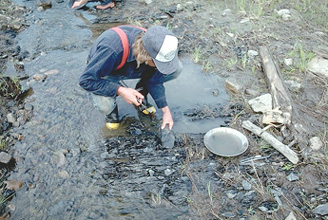 lying on the bare
slate bedrock which stood mostly on end in jagged pieces with an
abundance of cracks and crevices - a bedrock prospector's dream. I
picked up the match head sized nugget. The creek was slow, small and
maybe four feet wide, four inches deep. I located a deep panning hole
and went to work cleaning out bedrock cracks. I used a large flathead
screwdriver to pry open the bedrock cracks and a spoon and knife to
scoop and scrape out the cracks.
lying on the bare
slate bedrock which stood mostly on end in jagged pieces with an
abundance of cracks and crevices - a bedrock prospector's dream. I
picked up the match head sized nugget. The creek was slow, small and
maybe four feet wide, four inches deep. I located a deep panning hole
and went to work cleaning out bedrock cracks. I used a large flathead
screwdriver to pry open the bedrock cracks and a spoon and knife to
scoop and scrape out the cracks.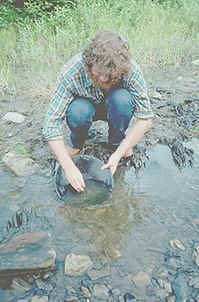 figured they would find out sooner or
later, so I went back up to the road house and roused them out of their
sleeping bags. Tired or not if they wanted some gold they'd better get
down there or lose it all to me!
figured they would find out sooner or
later, so I went back up to the road house and roused them out of their
sleeping bags. Tired or not if they wanted some gold they'd better get
down there or lose it all to me!