|
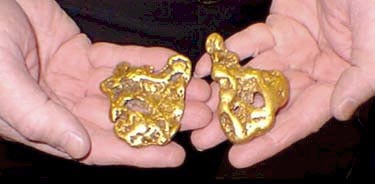
This gold came from a larger
mining operation than I am used to. This miner uses heavy equipment and is not into
dredging at all. Most serious miners in Alaska need to move large amounts of gravel to be
profitable. The recreational dredging that I do cannot compare to what a large operation,
using heavy equipment, can do. But I'll bet I have more fun! Big time mining is a lot of
hard work.
The picture above
was just to get you interested in the rest of the page. If my dredge nozzle ever uncovered
anything like that, I would probably inhale half of the river and drown in my
excitement. I
would welcome the opportunity to test this theory though. Below are some photos and
information about what I am presently doing as far as prospecting is concerned.


You might think that this little guy was afraid of
the water by the way he is acting.
Because of the extremely cold water, a dry suit is needed. I am also wearing a full
face mask, and 70 lbs. of lead weight. The breathing apparatus is called "Hookah", and
operates off of a compressor on the dredge, supplying unlimited air to the diver. The
water in this spot is moderately fast, but the overburden is shallow, averaging two feet
or less. In the middle
of the river, there is swept bedrock. I am taking about 2dwt of gold per day in my test holes
and looking for a good paying stringer. There have been some small nuggets also, even though
this river is not noted for anything except fine gold.
Below is a photo of the section of river I am working, note the small creek coming in
from the left. This would create a diversion in high water that could cause gold to drop.
My
test holes so far have been upstream of this creek, and interestingly enough, the best
gold is coming from the outside bend on the left of this photo. This summer I plan to
concentrate
on the section just downstream from this creek. So far, I have been
working on the right bank of this stream.


Chena River at Ottertail
Creek |
Typical fine gold cleanup |
Even with Alaska's 24 hour long days, it is hard to make much progress with just one day
trips. If I just figure travel time and setup and takedown time for the dredge, along
with cleanup, total time can be as much as six hours. Then you have to factor in dredging
time
and any maintenance that is required. This is the reason that sampling goes so slowly
in this river. Once I get set up, I can move a lot of gravel in a short time, but I need to
locate
the paying stringers first.
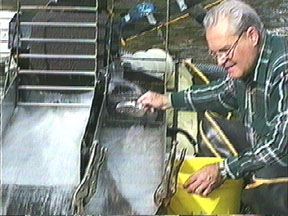
Below is my operation at cleanup time. This is after the triple sluice has been cleaned
and the mats removed. A small "hand sluice" is set up on the end of one of the side
boxes on the dredge. The riffles are removed. The dredge is run at "idle" speed, and the
concentrate that has been previously screened, is fed with a small scoop into the side
sluice. Any nuggets
will stay in the upper sluice and the finer gold gets trapped in the
"hand sluice".
Click
on this link for some Great
Stories
Want
to talk to modern day prospectors? Would you like a place where you can
ask questions about mining in Alaska, or just see what a great bunch of
folks Alaskan miners are? Come and join the fun on the Alaska Gold
Forum, we love visitors.
Alaska
Gold Forum



Click Here!
The
author is a member of

Copyright
2004

Alaska
Internet Resources |